
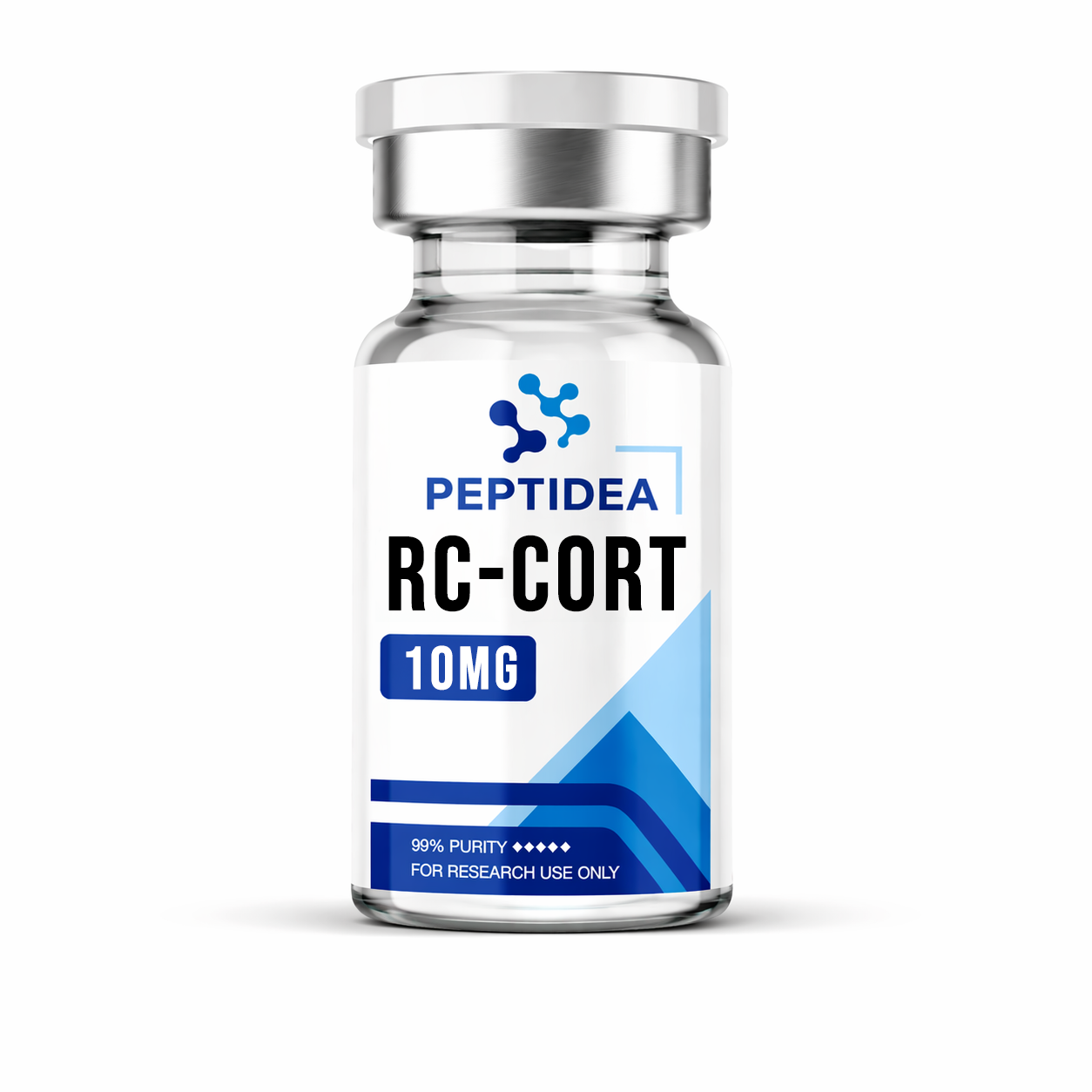
RC-CORT | Advanced Cortical & Neurobiology Research
RC-CORT
Advanced Cortical & Neurobiology Research
Four Amino Acids. One Specialized Research Story.
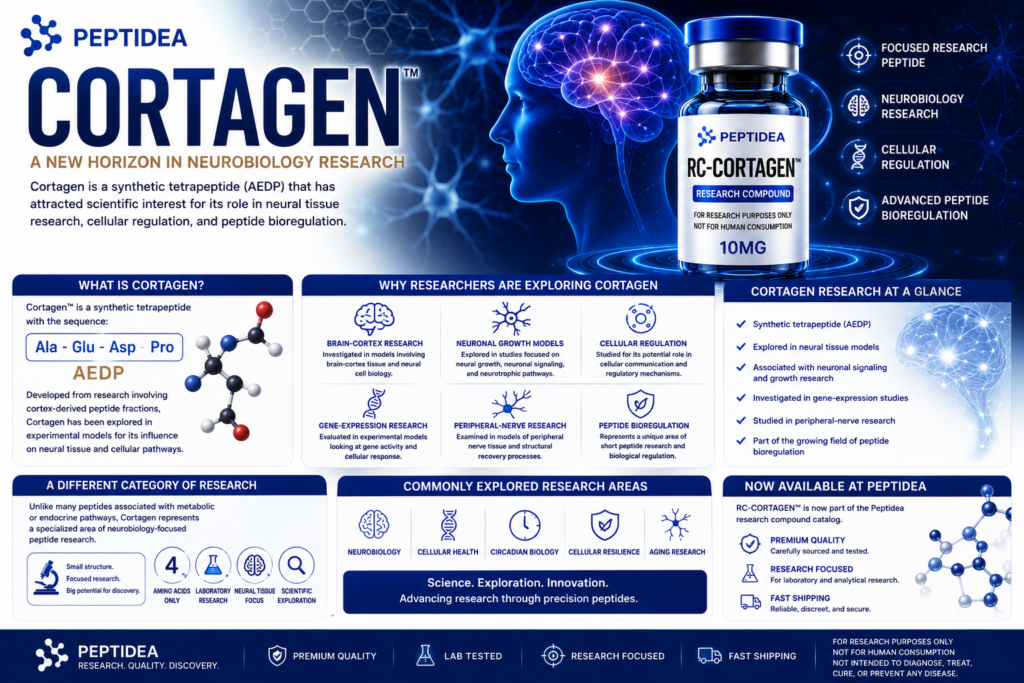
Cortagen is a synthetic tetrapeptide composed of:
Ala–Glu–Asp–Pro
AEDP
This compact four-amino-acid peptide has attracted scientific interest in experimental research involving cortical tissue, neuronal signaling, cellular regulation, gene-expression pathways, and short-peptide bioregulation.
A New Frontier in Neurobiology Research
Many familiar research compounds are associated with metabolic, endocrine, mitochondrial, or tissue-recovery pathways.
Cortagen represents a different area of peptide science.
Its research history centers on short regulatory peptides and their potential interactions with cortical tissue, neural biology, cellular communication, and tissue-associated biological pathways.
Small Peptide. Specialized Research.
What Is Cortagen?
Cortagen is a synthetic tetrapeptide with the amino-acid sequence Ala–Glu–Asp–Pro, abbreviated AEDP.
It was developed from research involving peptide fractions associated with cortical tissue and has since appeared in experimental studies involving neural-tissue models, cellular activity, gene expression, and peptide bioregulation.
Its small structure gives researchers a focused model for investigating how short peptides may interact with specialized biological pathways.
Why Researchers Are Exploring Cortagen
Brain-Cortex Research
Cortagen has been evaluated in experimental models involving cortical tissue and organotypic neural cultures.
These studies contributed to scientific interest in the tissue-associated activity of short regulatory peptides.
Neuronal Signaling
Researchers have explored Cortagen in laboratory models involving neuronal communication, neural-tissue response, and cellular signaling pathways.
The available research remains exploratory and does not establish neurological effects in humans.
Cellular Regulation
Short peptides are being investigated for their potential influence on cellular communication and biological-response pathways.
Cortagen offers a specialized research model for studying these regulatory mechanisms.
Gene-Expression Research
Experimental investigations have evaluated Cortagen in models involving patterns of cellular and gene activity.
This remains an emerging area of research requiring further independent investigation.
Peptide Bioregulation
Cortagen belongs to the developing field of short-peptide bioregulation—the study of how compact amino-acid sequences may interact with tissue-specific cellular processes.
The Specialized Tetrapeptide
Ala–Glu–Asp–Pro
AEDP
Cortagen contains only four amino acids, yet its research profile includes several specialized areas:
- Cortical-tissue biology
- Neural-tissue models
- Neuronal signaling
- Cellular communication
- Gene-expression studies
- Biological-response pathways
- Short-peptide bioregulation
- Age-associated neurobiology research
What Makes Cortagen Different?
Focused Four-Amino-Acid Structure
Cortagen is a compact tetrapeptide rather than a larger or more complex signaling molecule.
Cortex-Associated Research History
Its development is connected to research involving peptide fractions associated with cortical tissue.
Specialized Neurobiology Focus
Cortagen occupies a distinct research category separate from metabolic, endocrine, and recovery-focused compounds.
Regulatory-Pathway Research
Researchers are interested in its relationship to cellular communication, biological regulation, and tissue-associated signaling.
Cortagen Research at a Glance
Synthetic Tetrapeptide
Ala–Glu–Asp–Pro, abbreviated AEDP.
Cortical and Neural Models
Explored in experimental research involving cortical and neural tissue.
Neuronal Signaling
Associated with laboratory investigations of neuronal communication pathways.
Cellular Regulation
Studied in experimental models involving cellular activity and biological response.
Gene Expression
Included in exploratory investigations involving patterns of gene activity.
Peptide Bioregulation
Part of the growing scientific field focused on short regulatory peptides.
RC-CORT
Advanced Cortical & Neurobiology Research
Sequence: Ala–Glu–Asp–Pro
Abbreviation: AEDP
Format: Lyophilized research compound
Availability: Available now
Primary Research Areas
- Brain-cortex biology
- Neural-tissue research
- Neuronal signaling
- Cellular regulation
- Gene-expression models
- Peptide bioregulation
Commonly Explored Research Categories
Researchers interested in Cortagen may also review compounds associated with:
Pinealon
Short-peptide bioregulation and neuronal research.
Semax
Neuronal signaling and neurobiology research.
Selank
Neuropeptide and neurological-signaling research.
SS-31
Mitochondrial function and cellular-resilience research.
NAD+
Cellular-energy and metabolic-signaling research.
These references identify related research categories only and do not imply that the compounds should be combined.
Explore a Different Direction in Peptide Science
Cortagen brings a specialized neurobiology-focused tetrapeptide to the Peptidea research catalog.
Its four-amino-acid structure, cortex-associated research history, and connection to peptide bioregulation distinguish it from more familiar metabolic and recovery-focused compounds.
Research Disclaimer
For lawful laboratory research purposes only.
Not for human or veterinary use.
Not intended to diagnose, treat, cure, or prevent any disease.
Available Cortagen literature is limited and primarily preclinical. Product information should not be interpreted as evidence of established clinical safety or effectiveness.
Related products
Cognitive Research
RC-PINE Peptide | EDR Neuroprotection and Cognitive-Aging Research