
Advanced Dual-Pathway Metabolic Research
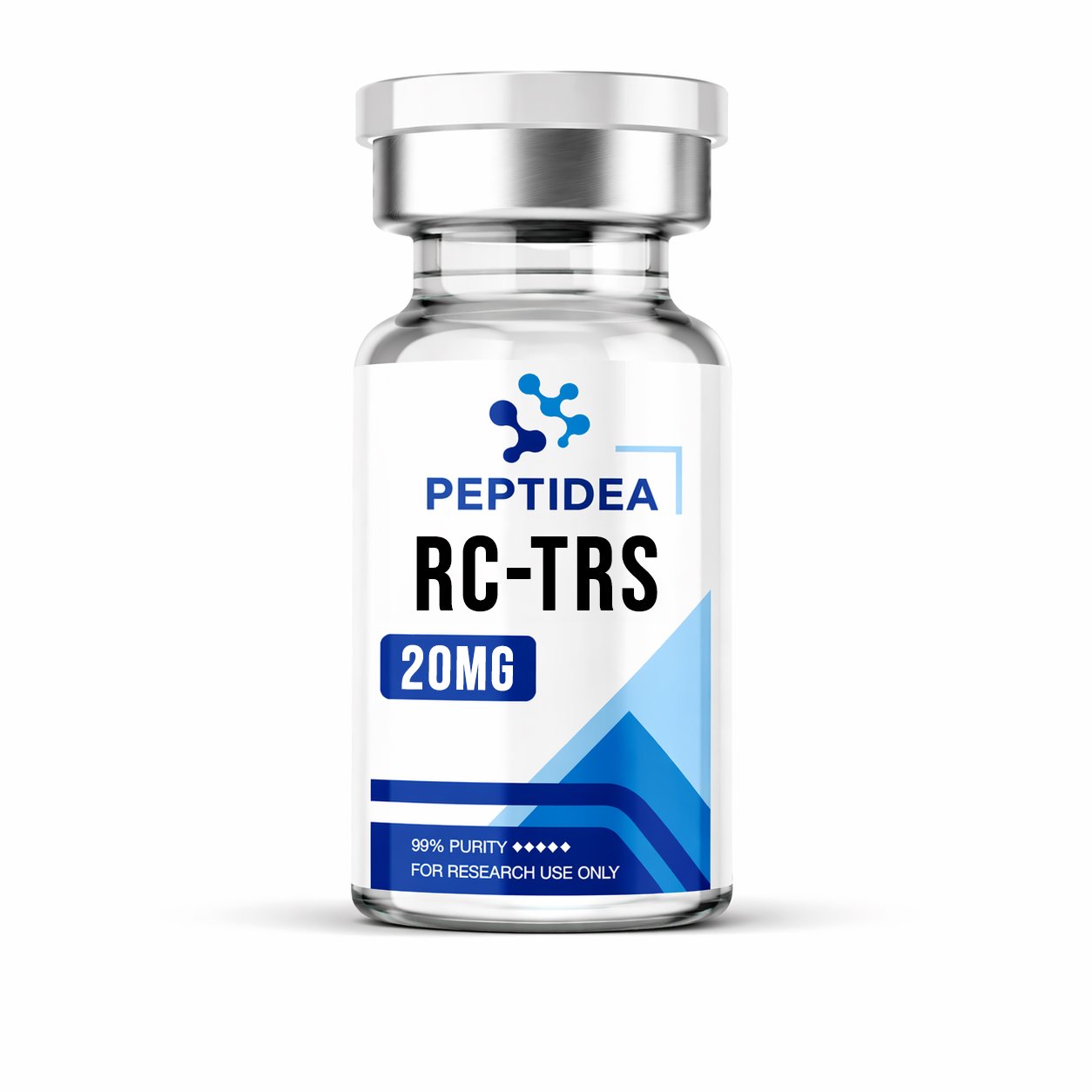
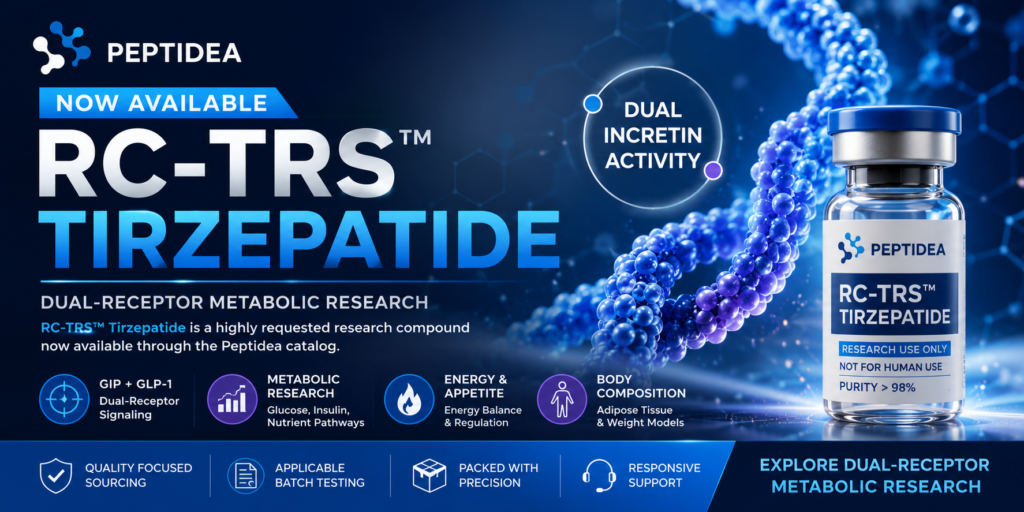
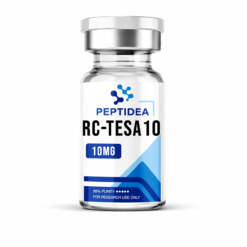
Unlock new opportunities in metabolic research with RC-TRS™, Peptidea’s premium research designation for tirzepatide. Designed exclusively for laboratory investigation, RC-TRS™ offers researchers a high-purity peptide for exploring dual receptor signaling, glucose-response mechanisms, energy metabolism, and nutrient regulation.
Research Grade • Third-Party Tested • Laboratory Use Only
[Shop RC-TRS™]
Explore Dual-Receptor Research
RC-TRS™ is investigated for its interaction with two major metabolic signaling pathways:
GIP Receptor Activity
Glucose-dependent insulinotropic polypeptide (GIP) plays an important role in nutrient sensing, glucose-dependent metabolic signaling, lipid metabolism, and energy regulation.
GLP-1 Receptor Activity
Glucagon-like peptide-1 (GLP-1) is widely studied for its involvement in glucose regulation, gastric emptying, appetite signaling, and overall metabolic homeostasis.
Together, these pathways make RC-TRS™ an important research tool for laboratories studying complex metabolic interactions.
Research Applications
Researchers may utilize RC-TRS™ to investigate:
- Dual GIP and GLP-1 receptor signaling
- Glucose-response pathways
- Nutrient sensing mechanisms
- Appetite and satiety signaling
- Gastric motility research
- Energy utilization
- Lipid metabolism
- Metabolic adaptation
- Body composition research models
- Receptor activation and signaling dynamics
Experimental outcomes vary depending on laboratory methods, study design, analytical techniques, and research models.
Why Researchers Choose Peptidea
Premium Research Quality
Each production batch is independently evaluated to verify peptide identity, purity, and analytical specifications.
Consistent Manufacturing
Reliable formulation supports reproducible laboratory research and consistent experimental protocols.
Certificate of Analysis
Batch-specific Certificates of Analysis are available to help verify research material before use.
Secure Packaging
Every vial is packaged to help preserve product integrity during storage and transportation.
Research Education
Peptidea provides educational resources designed to assist researchers with proper handling, storage, and laboratory documentation.
Available Research Sizes
Choose the size that best fits your laboratory protocol.
RC-TRS™ 10 mg
Excellent for pilot studies and proof-of-concept research.
RC-TRS™ 20 mg
Ideal for expanded laboratory investigations.
RC-TRS™ 30 mg
A versatile option for ongoing metabolic research projects.
RC-TRS™ 50 mg
Designed for laboratories requiring larger research quantities.
[Select Your Research Size]
Understanding Dual Agonist Research
Unlike compounds that primarily target a single receptor pathway, RC-TRS™ is investigated for activity at both the GIP and GLP-1 receptor systems.
Researchers may explore:
Nutrient Response
Study how receptor activation influences cellular responses following nutrient exposure.
Metabolic Signaling
Evaluate communication between multiple metabolic pathways during controlled laboratory experiments.
Energy Regulation
Investigate mechanisms associated with energy utilization and metabolic efficiency.
Gastric Motility
Study gastrointestinal signaling pathways associated with nutrient processing.
Lipid Metabolism
Research adipose tissue signaling and metabolic regulation in laboratory models.
Laboratory Documentation
To promote reproducible research, laboratories are encouraged to document:
- Batch number
- Certificate of Analysis
- Reconstitution date
- Solvent used
- Final concentration
- Storage conditions
- Experimental model
- Observation schedule
- Analytical methods
- Laboratory notes
Maintaining complete records supports consistent experimental outcomes.
Storage & Handling
Store lyophilized RC-TRS™ in a cool, dry environment protected from direct light.
Following reconstitution:
- Refrigerate according to laboratory protocols
- Minimize repeated freeze-thaw cycles
- Handle using aseptic laboratory techniques
- Label vials with concentration and preparation date
- Follow institutional storage and disposal procedures
Do not use material that appears contaminated or damaged.
Frequently Asked Questions
What is RC-TRS™?
RC-TRS™ is Peptidea’s proprietary research designation for tirzepatide, a synthetic peptide studied for dual GIP and GLP-1 receptor activity.
What makes RC-TRS™ different?
Its dual receptor activity provides researchers with an opportunity to investigate interactions between two complementary metabolic signaling pathways within the same experimental model.
Is analytical testing available?
Yes. Batch-specific Certificates of Analysis may be available for qualifying products.
Is RC-TRS™ intended for human use?
No. RC-TRS™ is manufactured and distributed exclusively for laboratory research, analytical testing, and educational purposes.
Can research results vary?
Yes. Experimental outcomes depend on study design, laboratory conditions, handling procedures, analytical methods, and the research model employed.
Who should purchase RC-TRS™?
Qualified laboratories, educational institutions, and research professionals conducting legitimate scientific investigations.
Research with Confidence
At Peptidea, we are committed to supporting the scientific community with dependable research materials, transparent quality documentation, and educational resources that promote responsible laboratory practices.
Whether conducting exploratory investigations or long-term metabolic studies, RC-TRS™ is designed to support high-quality research.
[Shop RC-TRS™ Today]
Research Use Disclaimer
RC-TRS™ is supplied strictly for laboratory research, analytical testing, and educational purposes only.
This product is not intended for human or veterinary use and is not a drug, food, dietary supplement, cosmetic, or medical device. No statements on this website should be interpreted as claims regarding diagnosis, treatment, cure, mitigation, or prevention of any disease or medical condition.
Purchasers are responsible for ensuring that all handling, storage, research, and disposal activities comply with applicable federal, state, local, and institutional regulations.
Related products
Cellular Repair & Recovery Research
Longevity & Cellular Lifecycle Research
Lyophilized
Cellular Repair & Recovery Research
Lyophilized
Cellular Repair & Recovery Research
Lyophilized
Lyophilized