
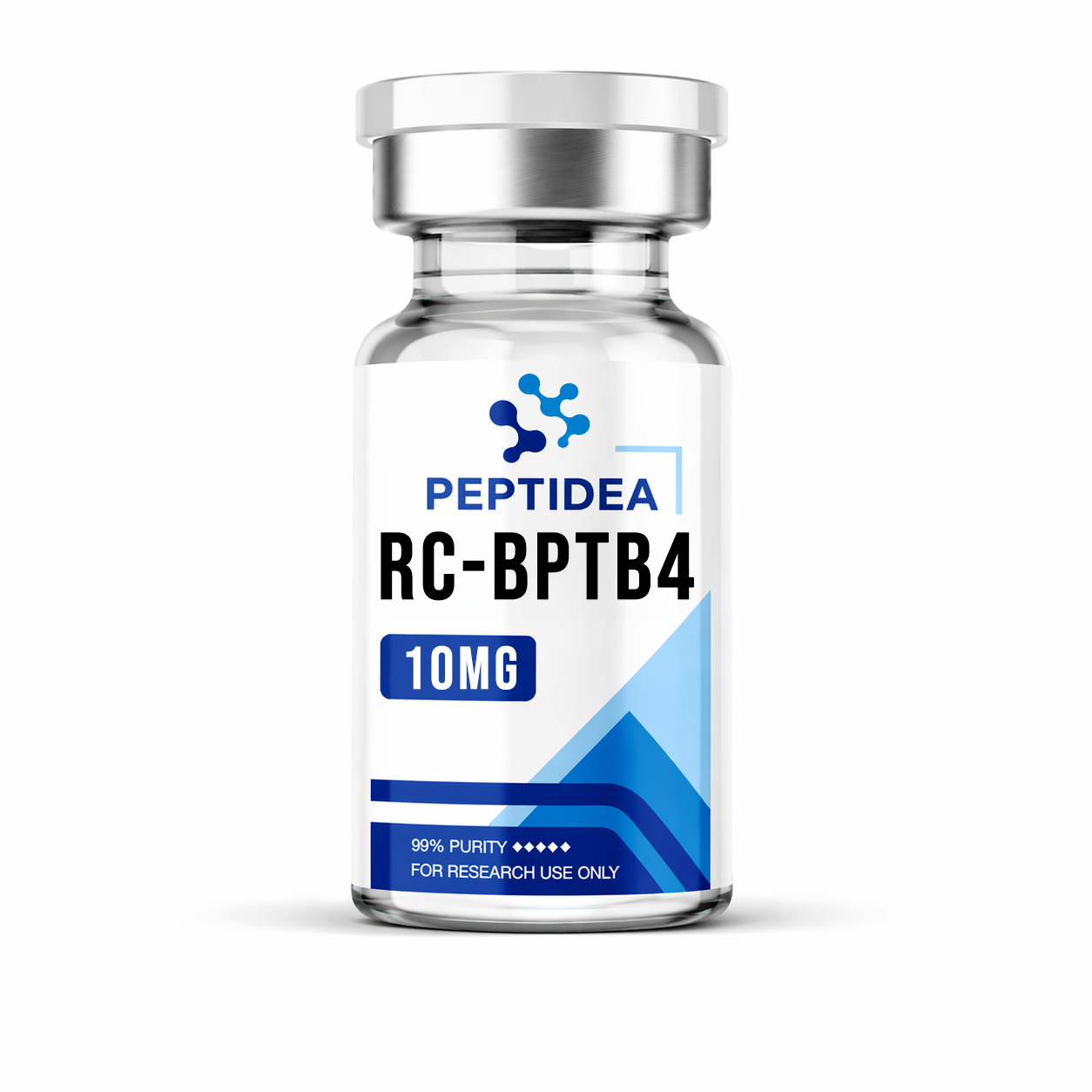
RC-BPTB4 | Recovery Research
Price range: $75.00 through $95.00
RC-BPTB4 combines two of the most recognized compounds in regenerative research. Researchers commonly explore this blend in studies involving connective tissue pathways, cellular recovery, angiogenesis models, and tissue maintenance signaling.
RC-BPTB4 | Advanced Recovery & Regenerative Research Blend
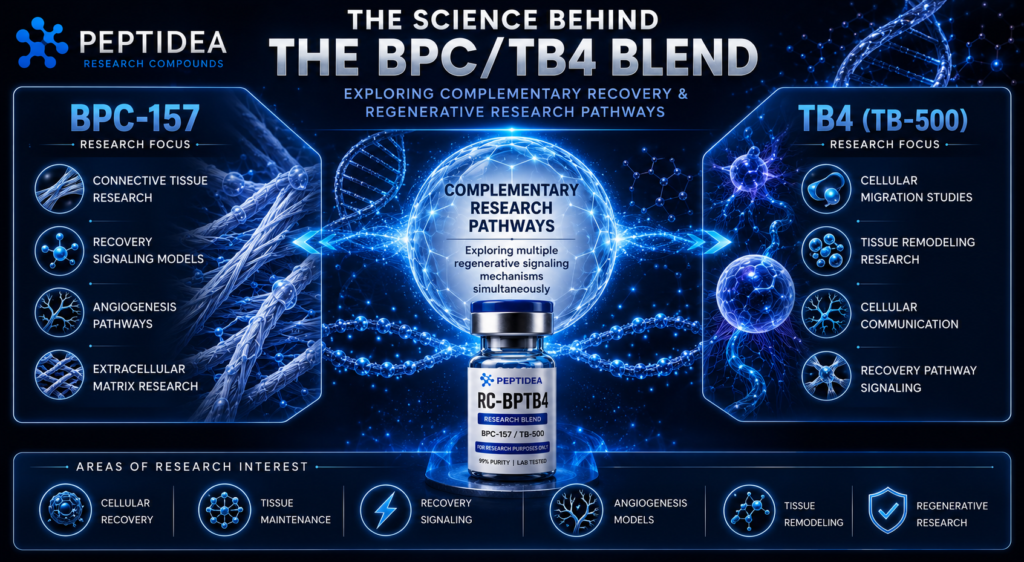
Explore the Synergy of BPC-157 and TB4 Research
RC-BPTB4 is a research blend designed for investigators exploring tissue repair pathways, cellular recovery mechanisms, angiogenesis models, and regenerative signaling research.
Combining BPC-157 and TB4 (TB-500) into a single research formulation allows researchers to examine complementary biological pathways involved in recovery and tissue maintenance models.
What Is RC-BPTB4?
RC-BPTB4 combines two of the most recognized compounds in regenerative research:
BPC-157
BPC-157 is commonly studied in models involving:
- Connective tissue pathways
- Recovery signaling mechanisms
- Cellular repair models
- Angiogenesis-related research
- Extracellular matrix pathways
TB4 (TB-500)
TB4 is frequently investigated for:
- Cellular migration research
- Tissue remodeling pathways
- Recovery signaling studies
- Cytoskeletal regulation models
- Cellular communication mechanisms
Together, these compounds are often explored for their complementary roles in advanced regenerative research.
Why Researchers Study the Blend
Researchers frequently investigate BPC-157 and TB4 together because they may influence multiple biological pathways associated with recovery and tissue maintenance.
Areas of interest include:
Connective Tissue Research
Studies involving tendons, ligaments, fascia, and connective tissue signaling pathways.
Recovery Pathway Models
Research focused on biological mechanisms associated with tissue maintenance and cellular recovery.
Angiogenesis Research
Exploration of pathways involved in blood vessel formation and nutrient delivery systems.
Cellular Signaling
Investigations into communication pathways that support cellular coordination and repair processes.
Tissue Remodeling
Research involving biological remodeling and recovery mechanisms.
Research Applications
Researchers may explore RC-BPTB4 in studies related to:
- Connective tissue research
- Recovery pathway signaling
- Cellular repair mechanisms
- Angiogenesis models
- Extracellular matrix studies
- Cellular migration research
- Tissue remodeling pathways
- Long-term recovery models
How the Blend Works Together
BPC-157 Research Focus
✓ Connective tissue pathways
✓ Recovery signaling models
✓ Cellular repair research
✓ Angiogenesis-related pathways
✓ Extracellular matrix support
TB4 Research Focus
✓ Cellular migration studies
✓ Tissue remodeling research
✓ Recovery pathway signaling
✓ Cellular communication models
✓ Cytoskeletal regulation pathways
Combined Research Interest
The combination allows researchers to examine multiple regenerative pathways simultaneously, making RC-BPTB4 one of the most frequently discussed blends in recovery-focused research communities.
Why Researchers Continue Discussing BPC/TB4
Few research blends have generated as much interest in regenerative research communities as BPC-157 and TB4.
Its continued popularity stems from the broad range of biological pathways researchers continue exploring, including tissue repair, cellular communication, angiogenesis, and recovery signaling.
Today, BPC/TB4 remains one of the most recognized combinations in advanced regenerative research.
Product Information
Product Name
RC-BPTB4
Category
Recovery & Regenerative Research
Research Focus
- Tissue Repair Research
- Recovery Pathways
- Angiogenesis Models
- Cellular Regeneration
- Connective Tissue Studies
Research Disclaimer
For research purposes only.
Not for human consumption.
Not intended to diagnose, treat, cure, or prevent any disease.
This product is not approved by the FDA.
All information presented is intended for educational and scientific discussion purposes only.
Lyophilized research compound blend
Net content: 20mg
Purity: ≥99% (HPLC verified)
Appearance: White lyophilized powder
Storage: Store at -20°C in a dry, controlled environment
For laboratory research use only. Not for human or veterinary use.
| Size | 10mg, 20mg, 30mg |
|---|
Related products
Lyophilized
Lyophilized
Lyophilized
Lyophilized
Lyophilized
Lyophilized
Research compound
Lyophilized