
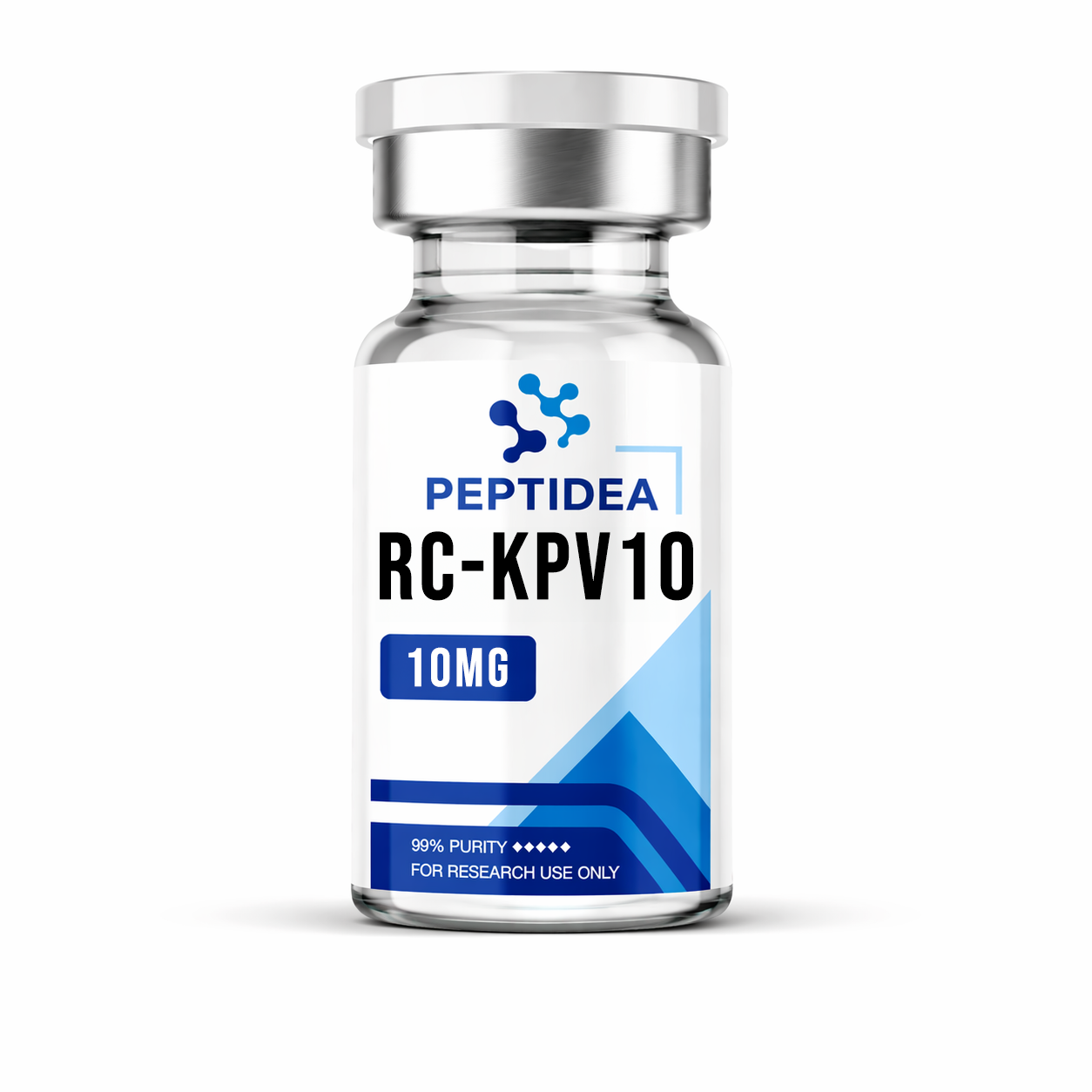
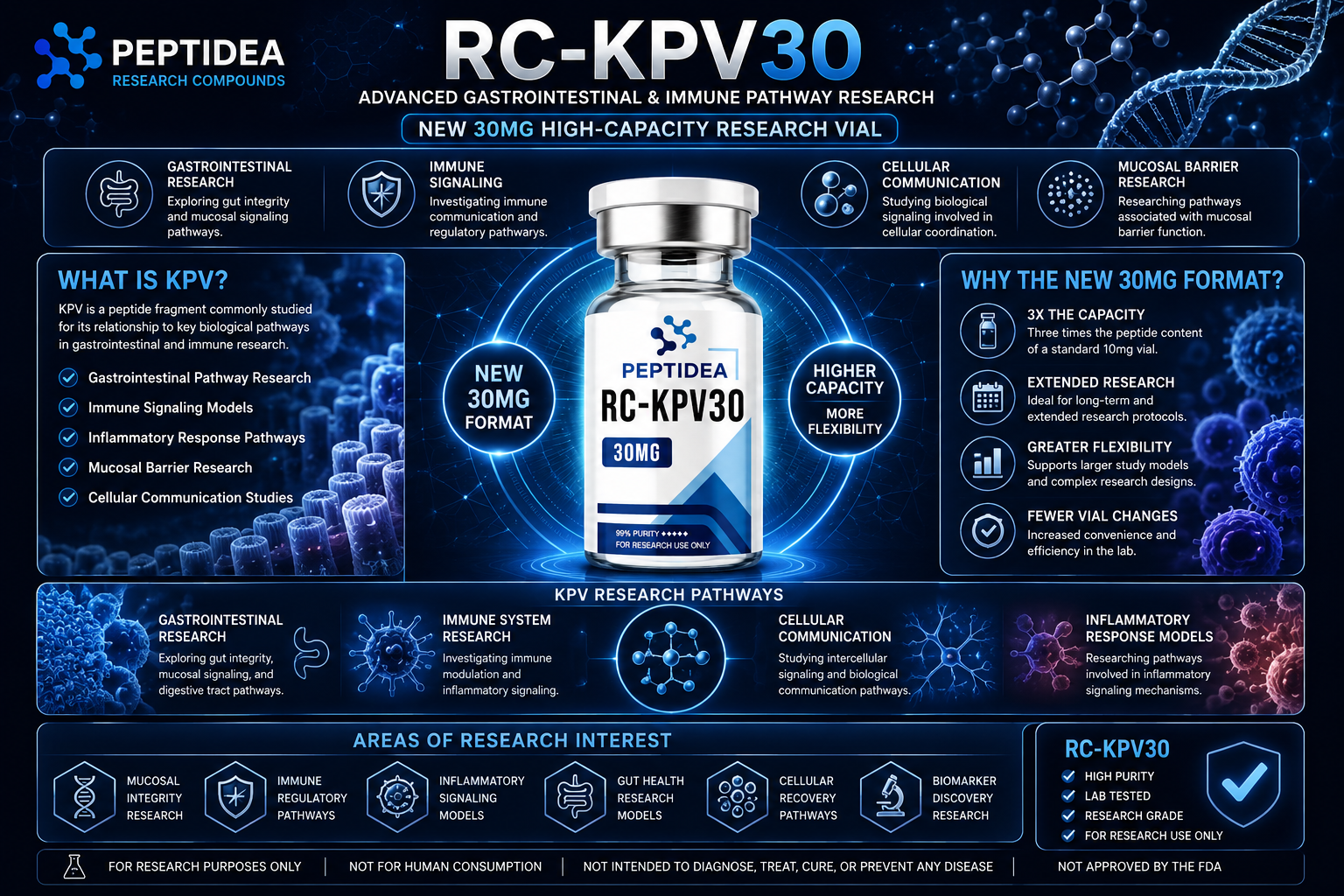
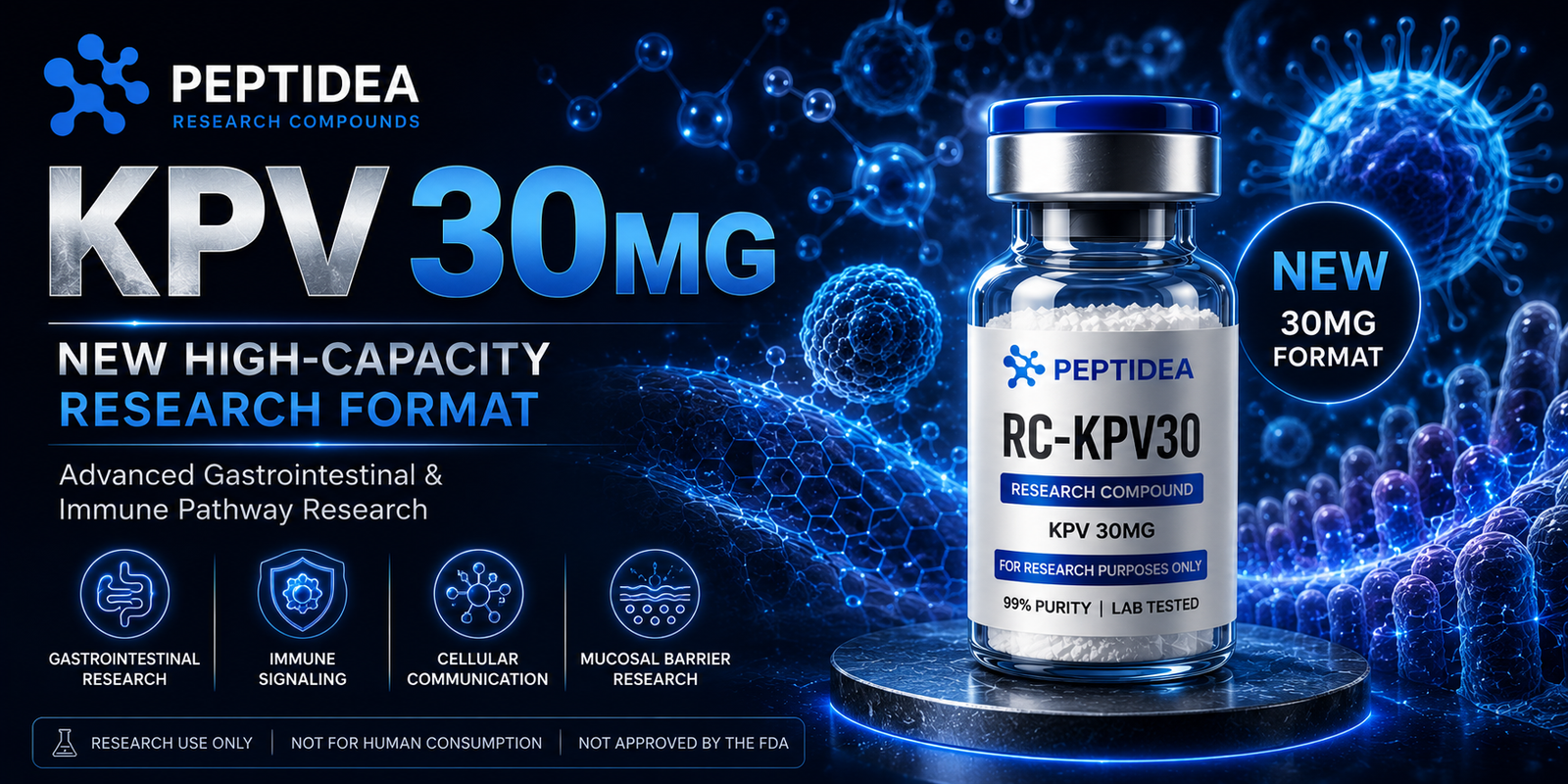
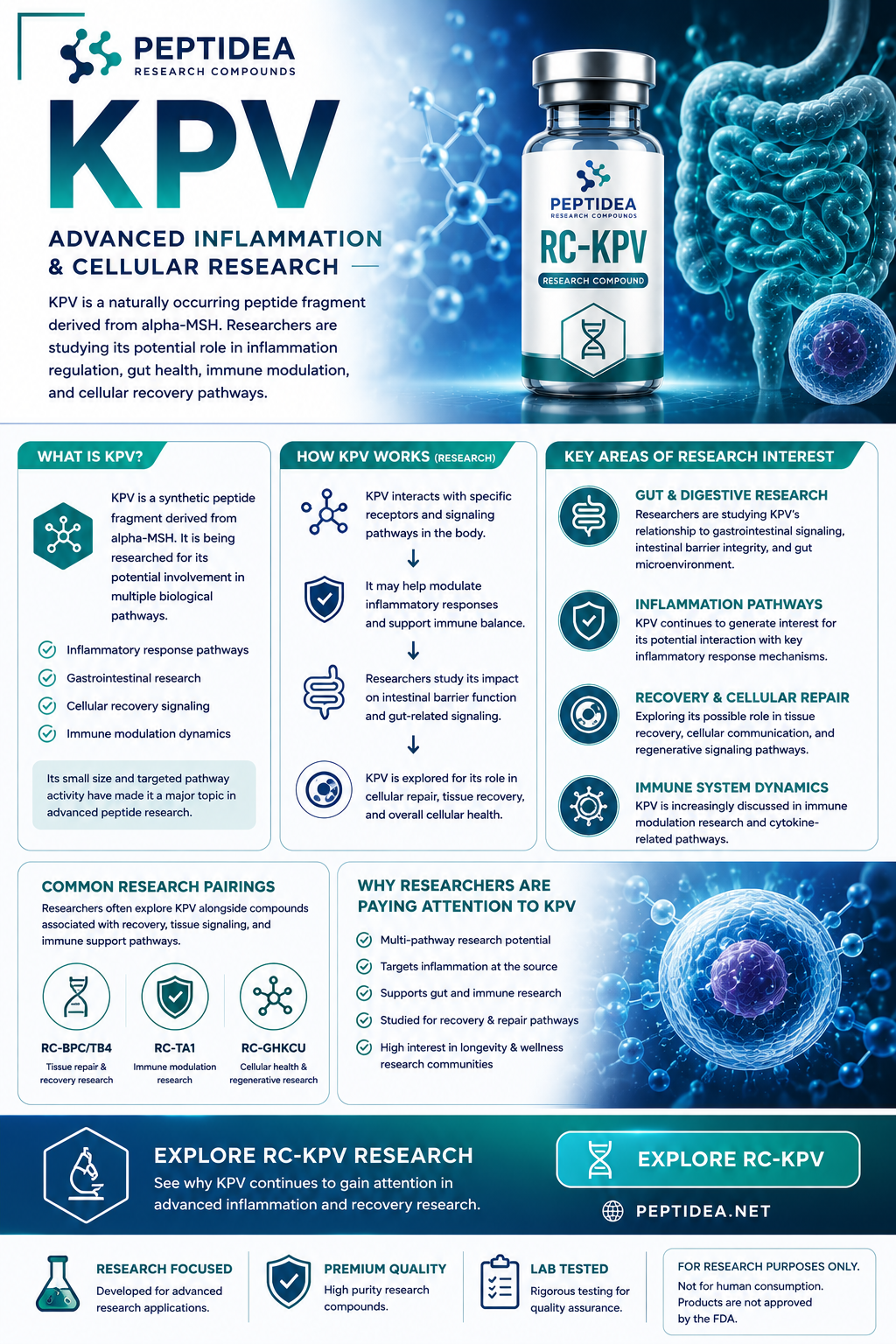
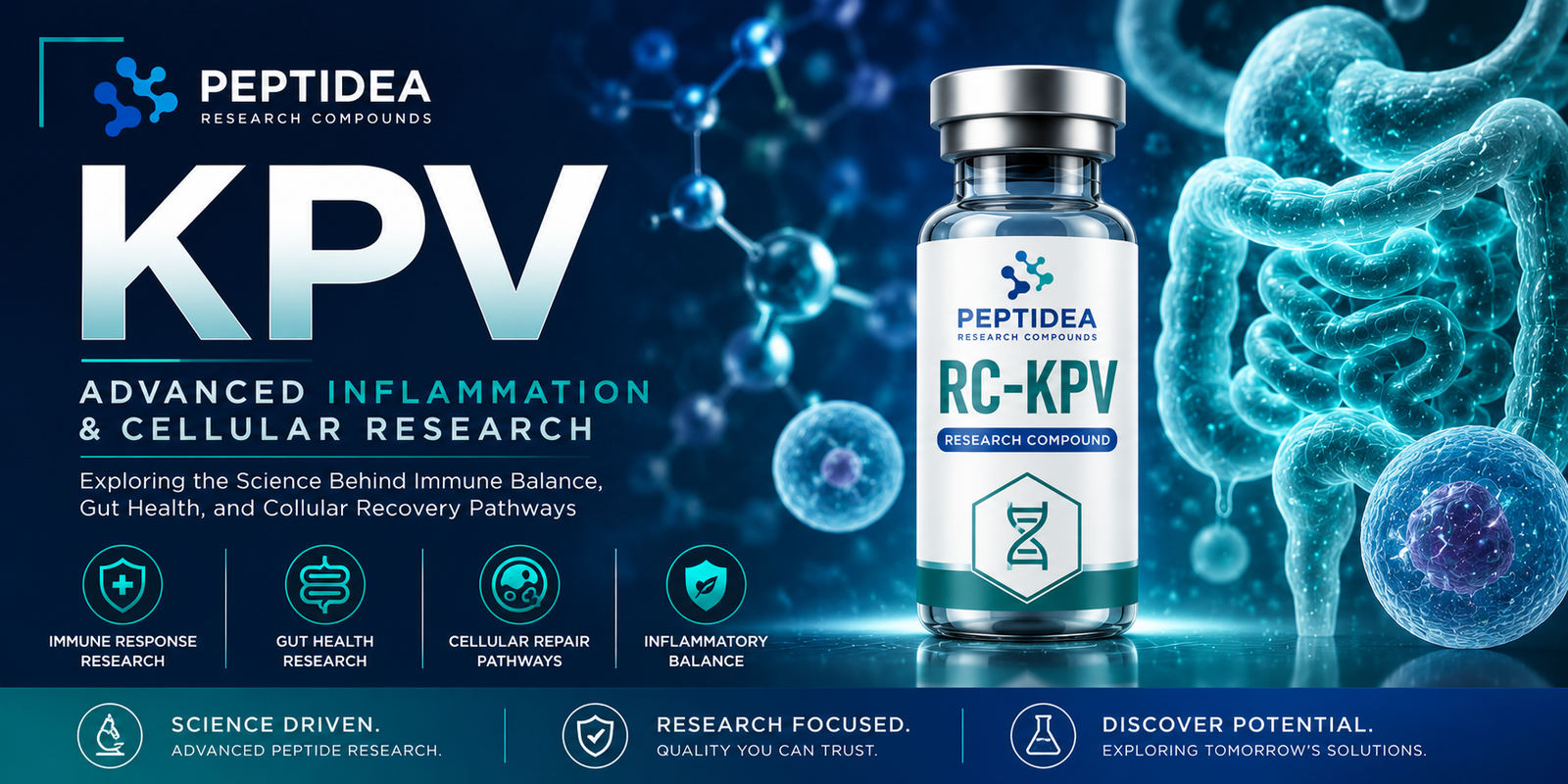
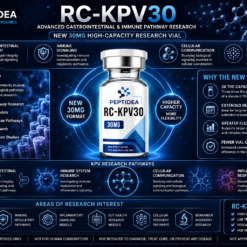
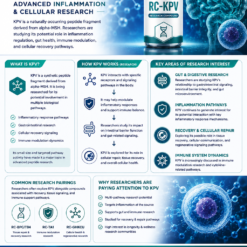
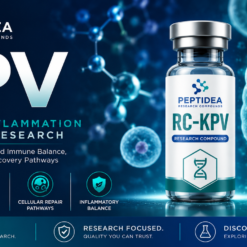
RC-KPV is a peptide research compound associated with studies involving inflammatory response pathways, immune system signaling, gastrointestinal research models, and cellular recovery mechanisms.
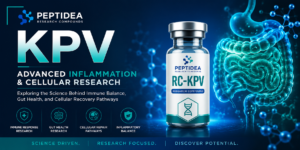
KPV is commonly discussed in research settings due to its connection to alpha-MSH-related peptide activity and its potential role in cellular signaling studies. Researchers continue to investigate how KPV may interact with biological pathways connected to inflammation, gut barrier function, immune modulation, and tissue response.
This compound is provided strictly for research purposes only and is not intended for human consumption, therapeutic use, diagnostic use, or treatment of any condition.
Compliant Key Features
- Research compound associated with inflammatory pathway studies
- Commonly explored in gut and gastrointestinal research models
- Studied for immune response and cellular signaling pathways
- Frequently discussed in cellular recovery and tissue response research
- Suitable for controlled laboratory research applications
- Research-use-only labeling and positioning
Research Applications
Researchers may explore RC-KPV in studies related to:
- Inflammatory response signaling
- Immune modulation pathways
- Gastrointestinal and gut barrier research
- Cellular communication mechanisms
- Tissue response and recovery models
- Cytokine-related research pathways
- Cellular stress response research
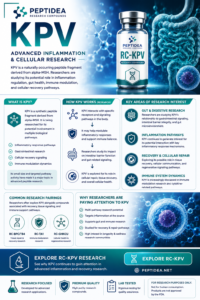
What Is KPV?
KPV is a short peptide sequence commonly identified as a fragment associated with alpha-MSH-related research. In laboratory settings, KPV has been studied for its potential interaction with signaling pathways connected to inflammation, immune response, and cellular regulation.
Why Researchers Study KPV
KPV has gained attention in research communities because it is often associated with multi-pathway biological models, especially those involving immune signaling, gut-related mechanisms, and inflammation-associated cellular responses.
Lyophilized research compound
Available in multiple configurations
Purity: ≥99% (analytical grade)
Appearance: White lyophilized powder
Storage: Store at -20°C in a dry, controlled environment
For laboratory research use only. Not for human or veterinary use.
| Weight | N/A |
|---|---|
| Size | 10mg, 30mg |
Related products
Cellular Repair & Recovery Research
Cognitive Research
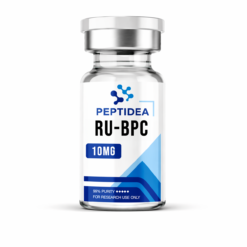
Cellular Repair & Recovery Research
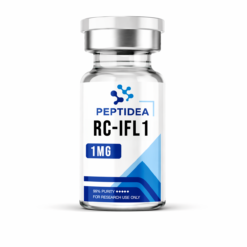
Lyophilized
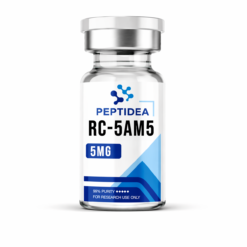
Cellular Repair & Recovery Research
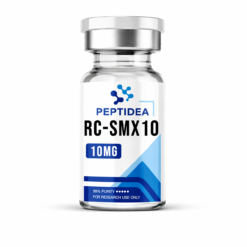
Cognitive Research
Lyophilized
Cellular Repair & Recovery Research