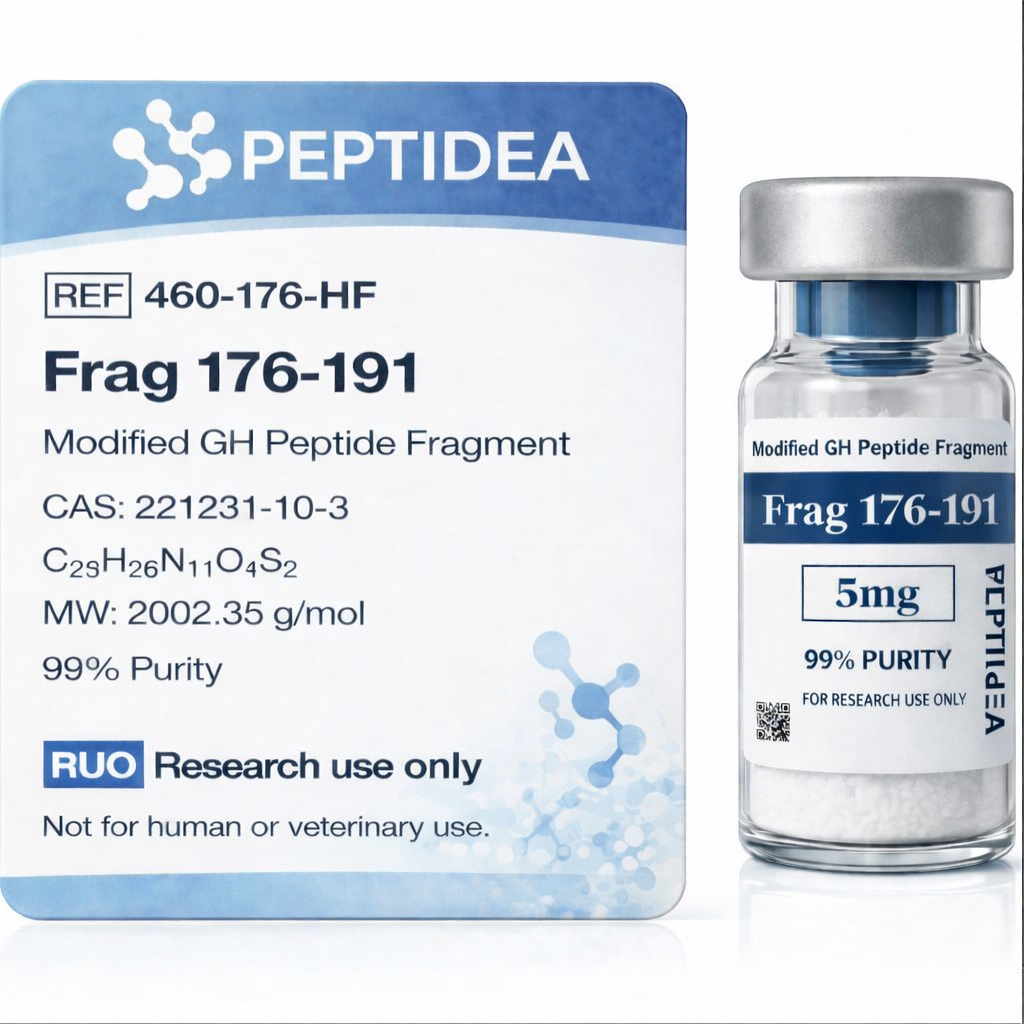
This product, HGH Fragment 176-191, is intended strictly for in vitro and in vivo laboratory research purposes only. It is not for human consumption, therapeutic use, diagnostic purposes, or any application outside of controlled scientific studies. All information on this site is provided for educational and scientific reference based on published preclinical and limited clinical literature. Researchers must comply with all institutional, local, and federal regulations governing peptide research in their jurisdiction. No claims are made regarding safety or efficacy in humans.
Tyr-Leu-Arg-Ile-Val-Gln-Cys-Arg-Ser-Val-Glu-Gly-Ser-Cys-Gly-Phe
(with a disulfide bridge between Cys⁷ and Cys¹⁴)Molecular Formula: C₇₈H₁₂₃N₂₃O₂₃S₂ (approximate)
Molecular Weight: ~1,815 Da
- β₃-Adrenergic Receptor (β₃-AR) Pathway: Preclinical data indicate the fragment may increase expression or sensitivity of β₃-adrenergic receptors in adipocytes and skeletal muscle. This leads to elevated intracellular cAMP, activation of protein kinase A (PKA), phosphorylation of hormone-sensitive lipase (HSL), and subsequent triglyceride breakdown. Enhanced thermogenesis and fatty acid oxidation have also been observed in some models.
academic.oup.com
- Direct Effects on Lipid Enzymes: It has been associated with stimulation of lipolytic activity and suppression of enzymes involved in fat synthesis (e.g., acetyl-CoA carboxylase), resulting in a net reduction in fat accumulation.
- Independence from GH/IGF-1 Axis: The peptide does not appear to bind significantly to the full GH receptor or stimulate IGF-1 production, differentiating its profile from native hGH in research settings.
These mechanisms have been examined mainly in obese rodent models (e.g., ob/ob mice, Zucker rats) and ex vivo adipose tissue, where chronic administration was linked to reduced body weight gain, increased fat oxidation, and altered lipid profiles without major disruptions to glucose homeostasis in the tested systems.
- Chronic treatment with the lipolytic fragment in obese mice reduced body weight, body fat mass, and increased lipolytic sensitivity in adipose tissue. Effects were associated with changes in β₃-AR expression.
pubmed.ncbi.nlm.nih.gov
- Early studies showed the C-terminal hGH fragment stimulated lipolysis and inhibited lipogenesis in isolated adipose tissue from rodents and humans, with reduced lipogenic activity observed after oral administration in some models.
tidelabs.co.uk
- Increased fat oxidation and reduced weight gain were reported in genetically obese animal models, independent of major IGF-1 changes.
Human Clinical Research (AOD-9604 Analog): Approximately 900 participants were involved across several Phase I and II trials. The compound was generally well-tolerated, with no significant effects on IGF-1 levels, glucose metabolism, insulin sensitivity, or immunogenicity. Some earlier trials reported modest body weight reductions (e.g., ~2.6 kg vs. ~0.8 kg placebo in one 12-week study at 1 mg/day), but larger Phase IIb trials incorporating diet and exercise did not consistently show statistically significant superiority over placebo for weight loss. Development as a pharmaceutical was discontinued after the pivotal trial.
Most data on the exact HGH Fragment 176-191 are preclinical. Human results (on the analog) showed inconsistent efficacy for body composition changes. Animal findings do not necessarily translate to humans.
Related products
-
Anti Aging Peptides
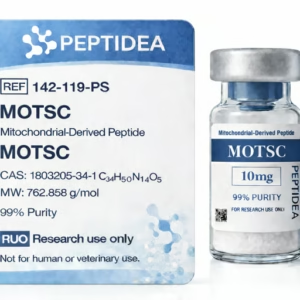
MOTS-C
Price range: $52.00 through $150.00 Select options This product has multiple variants. The options may be chosen on the product page -
Anti Aging Peptides
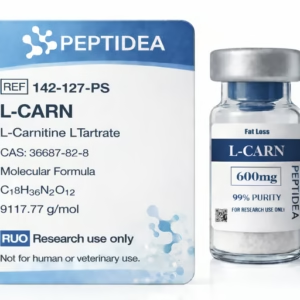
L-Carnitine
Price range: $65.00 through $95.00 Select options This product has multiple variants. The options may be chosen on the product page -
Anti Aging Peptides
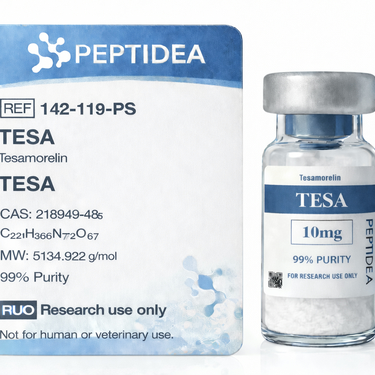
Tesamorelin
Price range: $55.00 through $175.00 Select options This product has multiple variants. The options may be chosen on the product page -
Anti Aging Peptides
Triple-Agonist
Price range: $75.00 through $375.00 Select options This product has multiple variants. The options may be chosen on the product page