
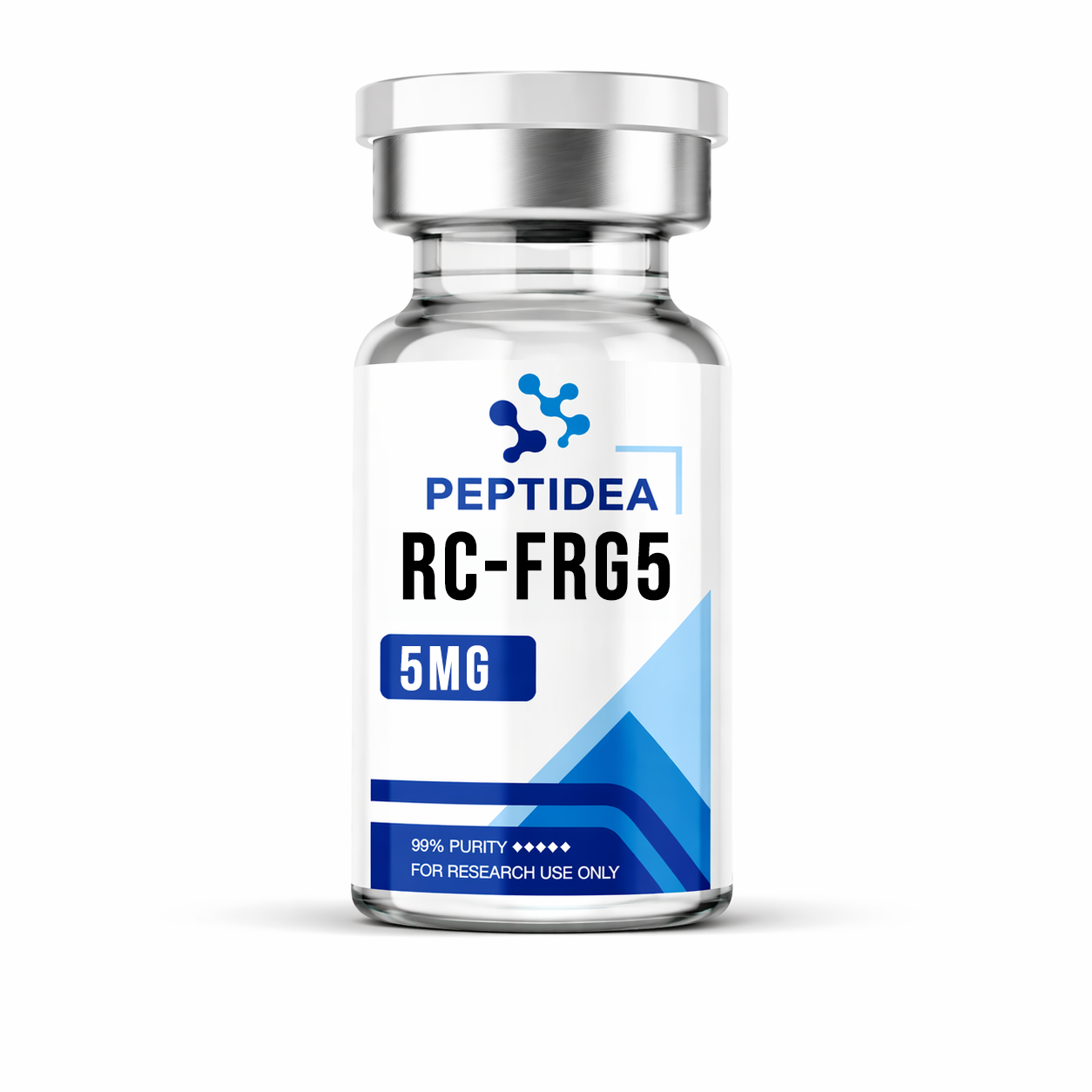
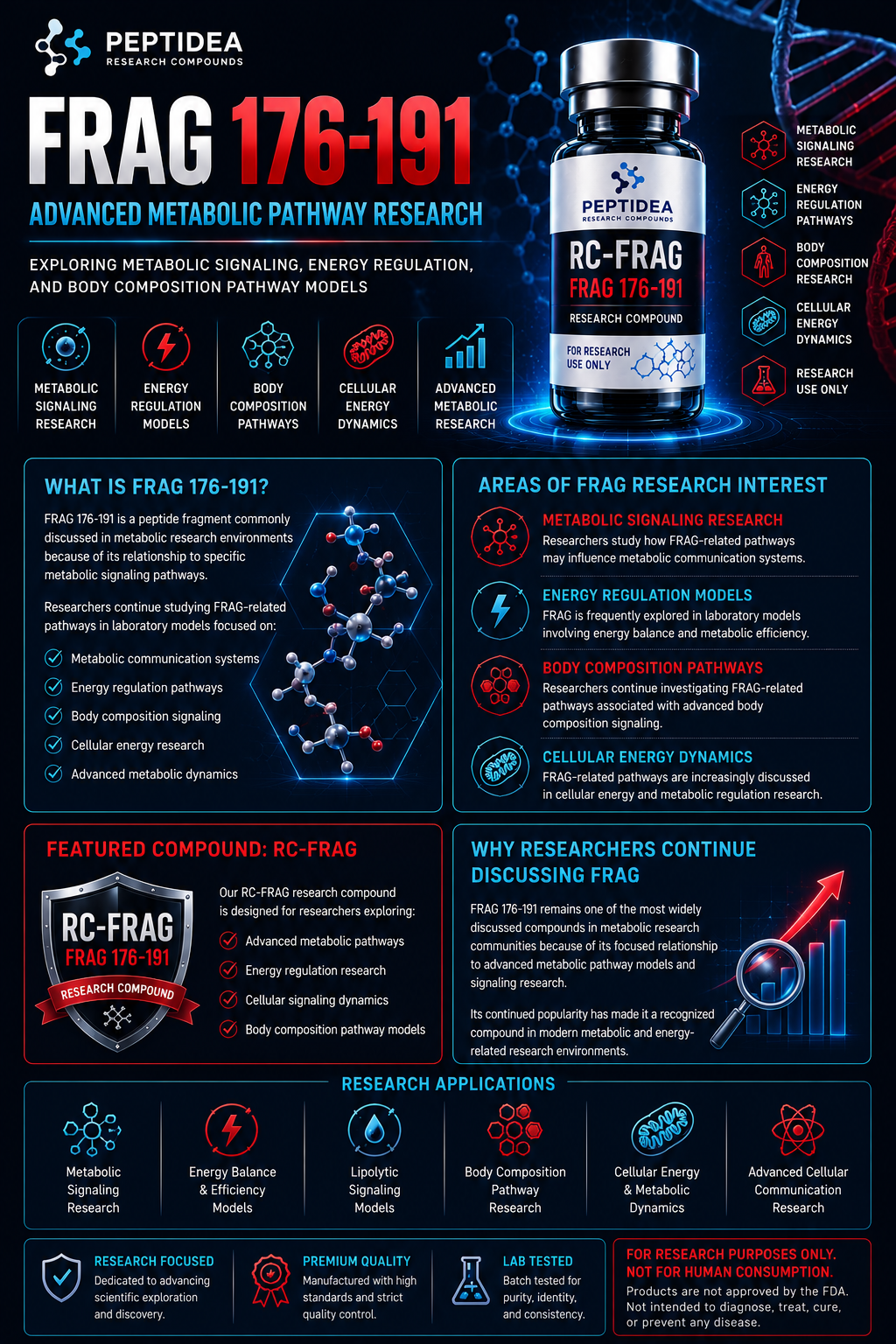
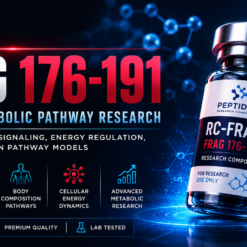
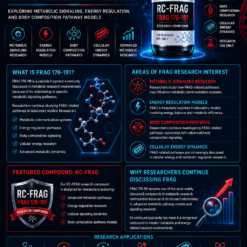
RC-FRAG is a research compound commonly associated with studies involving metabolic signaling pathways, energy regulation research, body composition pathway models, and cellular energy dynamics.
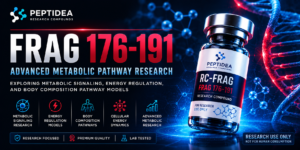
Researchers continue exploring FRAG-related pathways due to growing interest in compounds associated with advanced metabolic communication systems and signaling research. RC-FRAG is frequently discussed in laboratory environments focused on metabolic efficiency, energy balance pathways, cellular signaling dynamics, and metabolic research models.
Its focused pathway activity has made RC-FRAG one of the most recognized compounds in modern metabolic research discussions.
This product is provided strictly for research purposes only and is not intended for human consumption, therapeutic use, diagnostic use, or treatment of any condition.
Key Features
- Research compound associated with metabolic pathway studies
- Commonly explored in energy regulation research models
- Studied for body composition signaling pathways
- Frequently discussed in cellular energy and metabolic research
- Suitable for controlled laboratory research applications
- Research-use-only labeling and positioning
Research Applications
Researchers may explore RC-FRAG in studies related to:
- Metabolic signaling pathways
- Energy regulation research
- Cellular energy dynamics
- Body composition pathway models
- Advanced metabolic communication systems
- Metabolic efficiency and signaling studies
- Cellular signaling pathway research
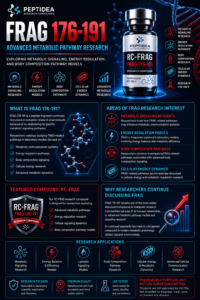
What Is RC-FRAG?
RC-FRAG is a peptide fragment commonly discussed in metabolic research communities because of its relationship to advanced metabolic signaling pathways and energy regulation research models.
Researchers continue studying RC-FRAG-related pathways in laboratory environments focused on metabolic communication systems, body composition signaling, and cellular energy research.
Why Researchers Study RC-FRAG
RC-FRAG continues generating strong interest because researchers are increasingly focused on compounds associated with metabolic signaling dynamics and advanced energy regulation research.
Its continued presence in metabolic research discussions has made it one of the most recognized compounds in modern metabolic pathway research environments.
Lyophilized research compound
Available in multiple configurations
Purity: ≥99% (HPLC verified)
Appearance: White lyophilized powder
Storage: Store at -20°C in a dry, controlled environment
For laboratory research use only. Not for human or veterinary use.
Related products
Lyophilized
Lyophilized
Lyophilized
Research compound
Lyophilized
Lyophilized
Lyophilized
Lyophilized